Carlsberg Foundation grants DKK 1.5 million for an electron microscope
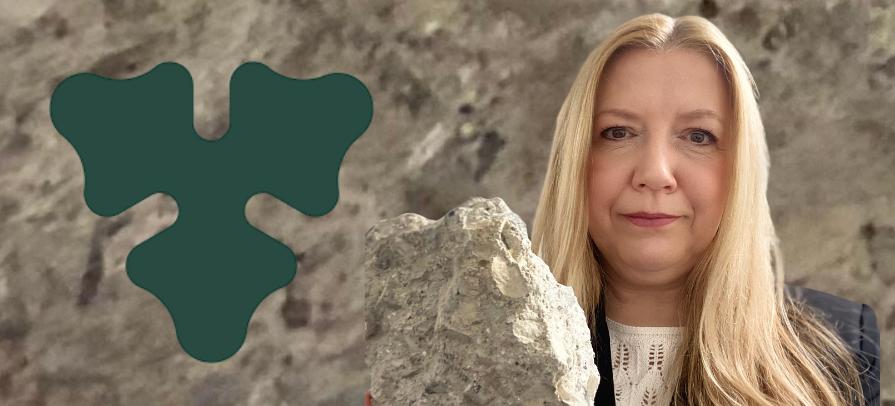
Karin Habermehl Cwirzen, Associate Professor at the Faculty of Natural Science and Engineering at the University of the Faroe Islands, has received a substantial grant from the Carlsberg Foundation to invest in an electron microscope—the first of its kind for research in the Faroe Islands. The grant amounts to DKK 1,540,801.
An electron microscope uses a focused beam of electrons instead of light to produce images at extremely high magnification, enabling e.g. investigations of materials, minerals, biological structures and electronic components at the micro- and nanoscale. Such instruments are widely used internationally across engineering, natural sciences, health sciences, and environmental research.
The instrument will be used in a research project aiming to understand how mechanochemical treatment changes the surface properties of recycled concrete and rockpowder in order to improve CO₂ uptake and hydration. Using the electron microscope, the mechanisms underlying these improvements will be investigated. The expected outcome is enhanced understanding of the reuse potential of these materials and their CO₂ uptake capacity, enabling the development of reactive materials for CO₂ binding.
Beyond the core research project, the presence of this instrument strengthens the analytical research capacity in the Faroe Islands and may support selected studies in other fields such as geology, electrical engineering, biology and health research.
Karin welcomes this special grant. Among other things, she says:
“This will be extremely beneficial for research, enabling more precise work both within my own field and others. It will be a valuable tool for building competencies within a research centre.”
Work will now begin to determine where the new instrument can be temporarily installed. In the longer term, the plan is for this, together with other instruments and equipment, to be housed in a laboratory at the new campus of the University of the Faroe Islands. Such instruments are sensitive and require good and secure physical conditions, as well as specialized expertise to operate them.
Need for greater investment in research infrastructure
In the Faroe Islands, there is no general annual public funding allocation for research infrastructure as exists in other countries. Instead, such investments must be made from the institutions’ operating budgets, through special grants from the government upon application, or as in this case by applying to foreign foundations for support.
Just over ten years ago, the research centre iNOVA was established with the aim that researchers at public institutions and companies would have access to modern laboratories, advanced equipment, and offices. Relatively large investments were made in instruments and technology using part of the funding from the Business Development Fund.
iNOVA has enabled valuable research activities and collaborations, but experience has shown that long-term operation of advanced research infrastructure requires stable funding for staffing, maintenance, and renewal of equipment. Limited resources in these areas have reduced the ability to fully utilise and sustain the equipment over time.
Overall, there is a continued need for stronger and more predictable frameworks for research infrastructure that enable advanced equipment to be acquired, properly established, and operated, thereby strengthening national research capacity across disciplines.